Clean, perpendicular slotting is a critical step in double seam inspection. If the cut distorts the seam or shifts the centerline, measurement accuracy can be compromised. The right seam saw ensures clean cuts, protects seam integrity, and supports reliable inspection results.
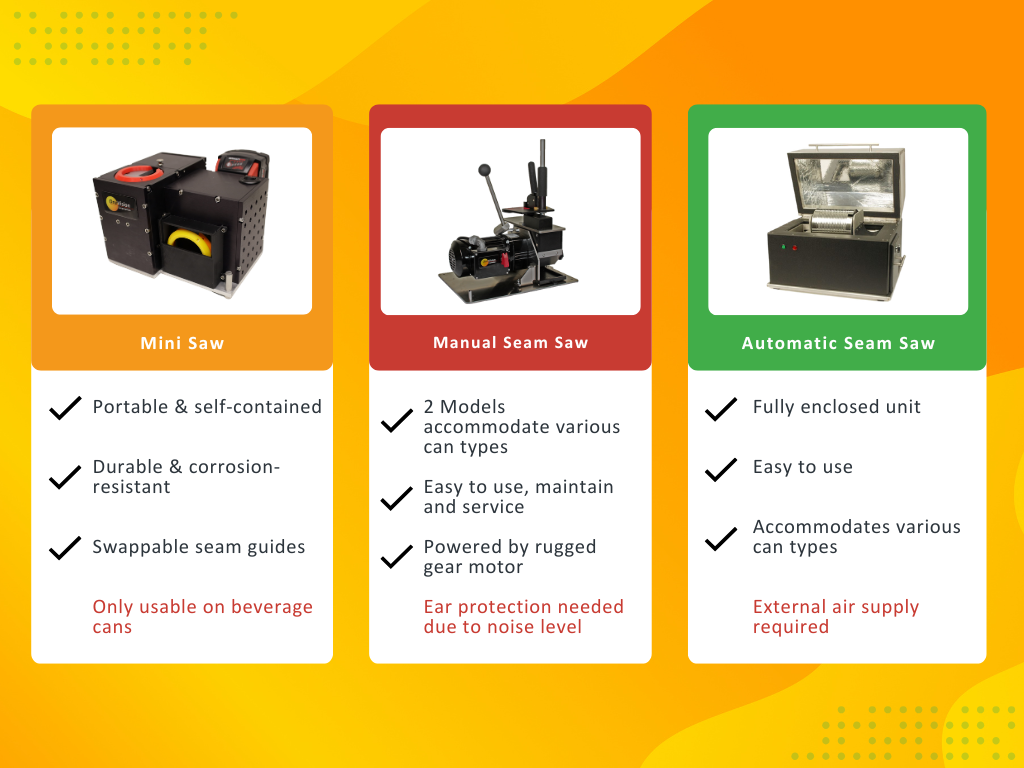
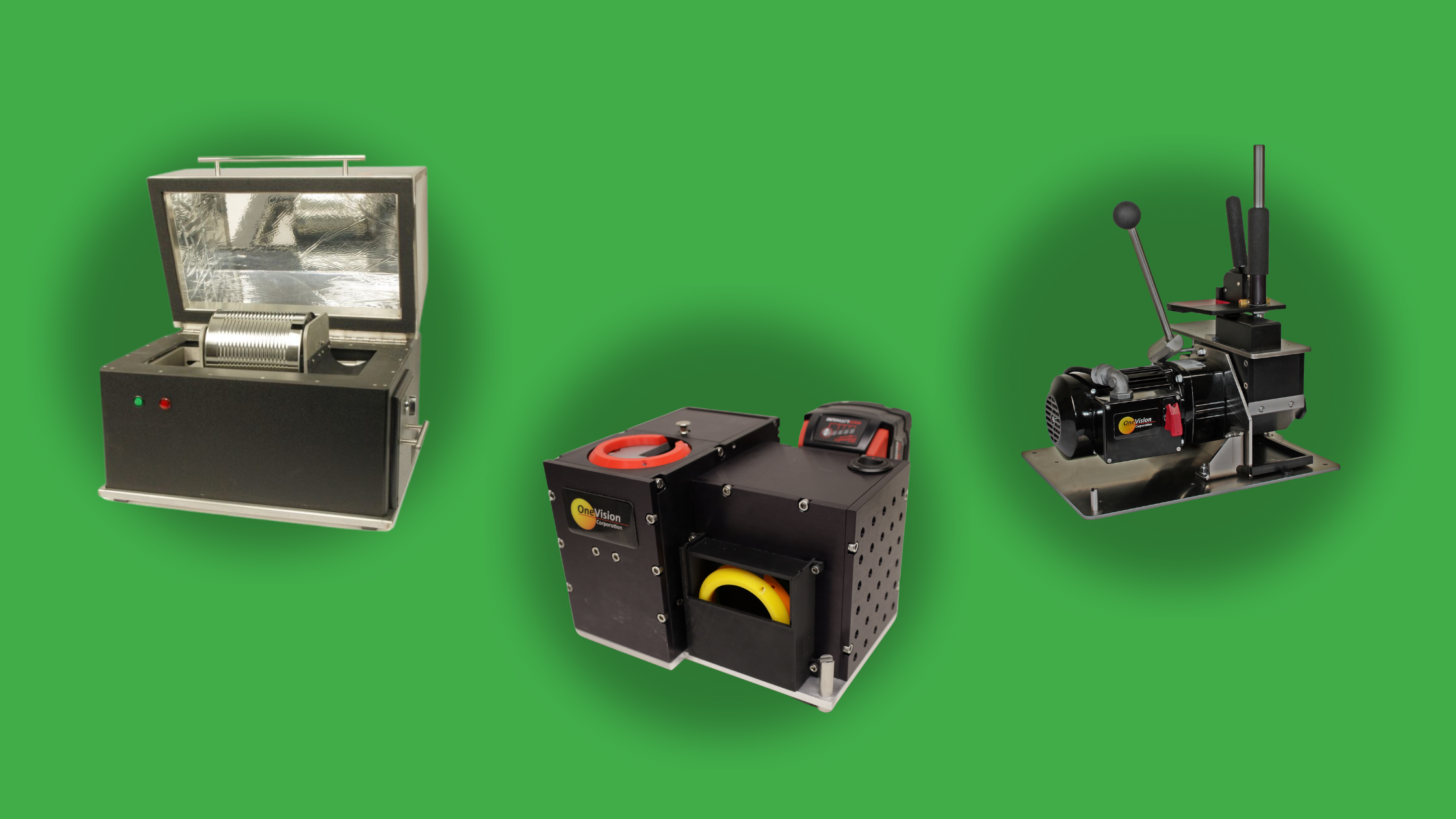
At OneVision, we offer three cutting options designed for different inspection environments and production needs. Let’s take a closer look at each one to help you determine which saw is the best fit for your operation.
Mini Saw
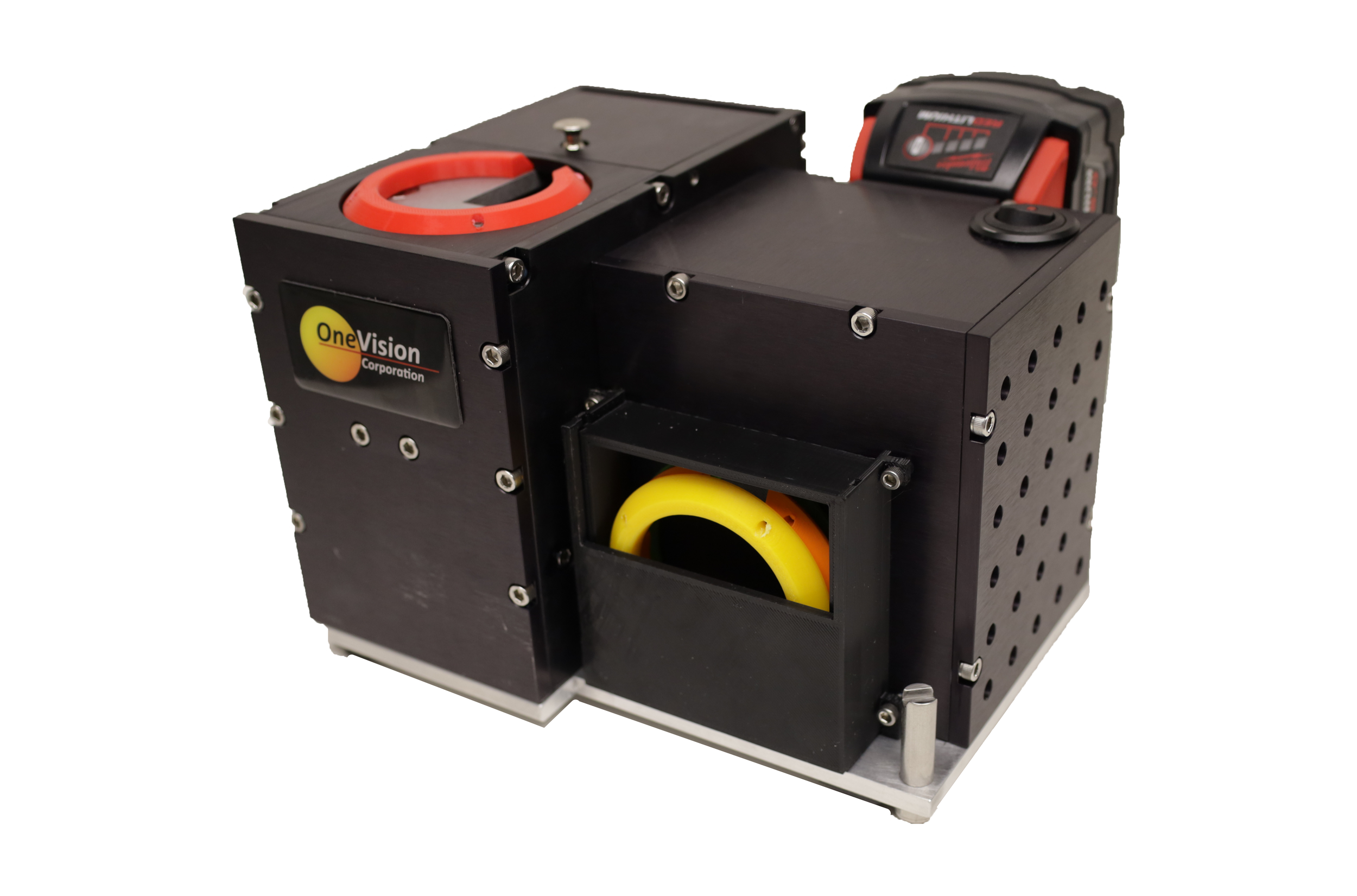
The Mini Saw is the most portable cutting solution in our lineup. Sold as part of the Portable Beverage System, it delivers quick, clean slotting on the go. The battery-powered saw offers a flexible, modern approach to cutting beverage can seams, making it ideal for line-side inspections and mobile quality checks.
Mini Saw
Featuring a carry handle, the Mini Saw is designed for portability. Weighing approximately 14 lbs with its battery installed, it’s easy to transport and take to the line for quick cutting operations.
The saw is anodized for added durability and corrosion resistance. The anodized finish holds up well in harsh production environments while giving the unit a clean, professional look.
Swappable seam guides are available for beverage cans sized 200 through 206. Manufactured using 3D printing technology, the guides can be quickly changed to accommodate different can sizes during slotting.
The Mini Saw is currently designed for aluminum beverage cans only. Due to the blade type and motor configuration, it is not intended for steel applications. A steel-capable model is currently in development, with an expected release later this year. While the Mini Saw is commonly sold as part of the Portable Beverage System, it can also be purchased separately if needed.
>> If you need to bring the saw to the can rather than the can to the saw, the Mini Saw is a great solution for your operation. <<
Manual Seam Saw
Designed for dedicated inspection stations, the Manual Seam Saw delivers consistent, repeatable cuts and dependable performance in high-volume environments.
Manual Seam Saw
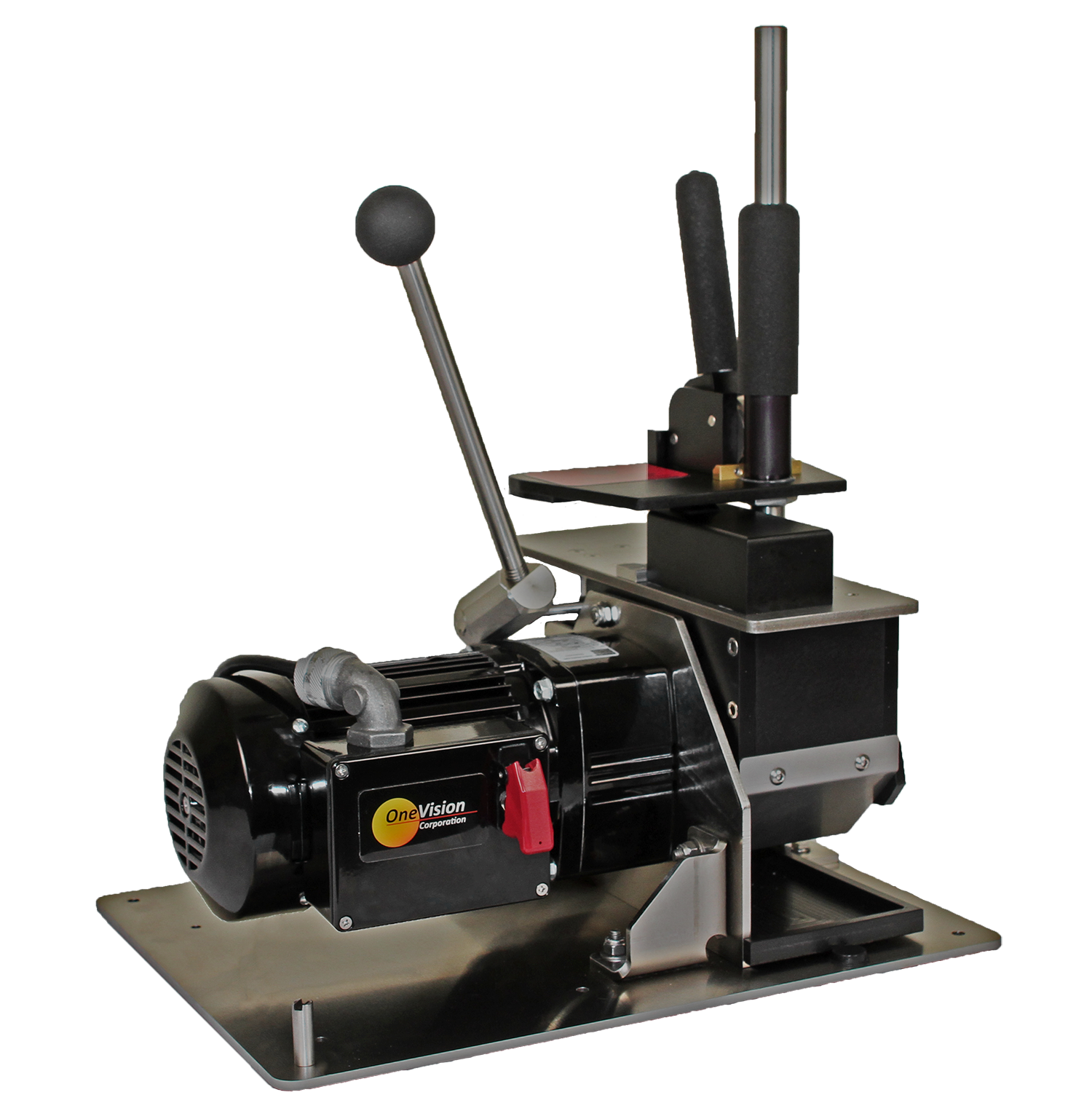
Two models are available to accommodate various can types. The Model 550 Manual Seam Saw slots steel cans sized 211 to 602 without part changes. The Model 555 Manual Seam Saw is designed specifically for cutting aluminum beverage cans.
The saw is easy to use, maintain, and service. Its tilt-table design makes cutting can seams quick, consistent and accurate. Built with longevity in mind, the unit can be serviced directly, including blade changes and routine parts replacements. It is well suited for high-volume production environments.
It produces precise cuts with a perpendicular centerline. Equipped with 30 teeth-per-inch blades for steel cans and 24 teeth-per-inch blades for aluminum cans, the saw is engineered to angle the cut properly, ensuring clean slots without seam distortion.
Powered by a rugged gear motor. Due to operating noise levels, operators are required to wear hearing protection during use.
>> If you need dependable, repeatable cuts in a high-volume environment, the Manual Seam Saw is a proven solution for your operation. <<
Automatic Seam Saw
For facilities seeking reduced noise and a more automated cutting process, the Automatic Seam Saw builds on the same cutting precision in a fully enclosed cabinet.
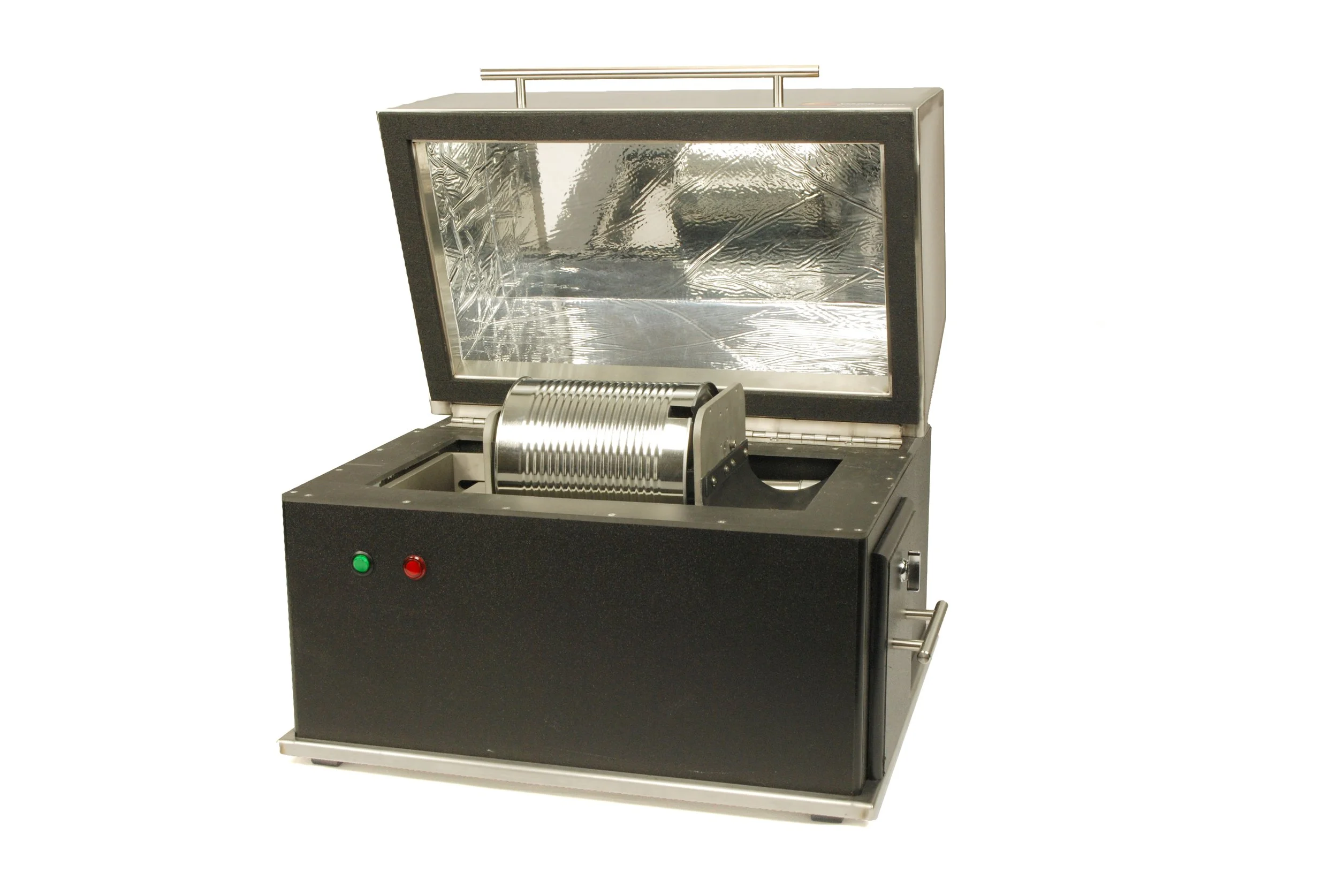
Automatic Seam Saw
Easy to Use. The self-contained design minimizes operating noise, making the Auto Saw suitable for a wide range of work environments, including laboratories, without the need for hearing protection.
Fully enclosed unit. The operator loads the can, closes the lid, and the cutting cycle starts automatically. Once the first cut is made, the operator opens the lid, rotates the can, and repeats the process. The aluminum lid shields the operator from potential debris, while the cabinet houses both the operating system and saw blades within a controlled environment.
Accommodates can sizes 200 to 603, including steel, beverage and composite cans. With dedicated seam guides designed for each can size, the saw produces slots ready for inspection. The Automatic Seam Saw streamlines and standardizes the cutting process.
Air-powered operation. An external air supply is required to support the pressurized system.
>> If your operation values enclosed cutting, reduced noise, and a more automated workflow, the Automatic Seam Saw is a strong fit for your operation. <<
So, Which OneVision Seam Saw is Right for Your Company?
Choosing the right seam saw requires understanding how and where you will perform seam inspections, whether it will be on the production floor, in a lab setting, or directly at the line. As such, consider the primary aspects of each saw:
Mini Saw: Mobility, quick checks, line-side inspections
Manual Seam Saw: High-volume use, maintenance-friendly, dedicated inspection stations
Automatic Seam Saw: Enclosed cutting, reduced noise, automated workflow
Each solution integrates with OneVision’s seam inspection systems to support accurate measurement and reporting.
Ultimately, your seam saw should align with your workflow, production volume, and inspection environment. When properly matched to your operation, the right seam saw will ensure repeatable, reliable inspection results—helping you maintain can seam quality.