
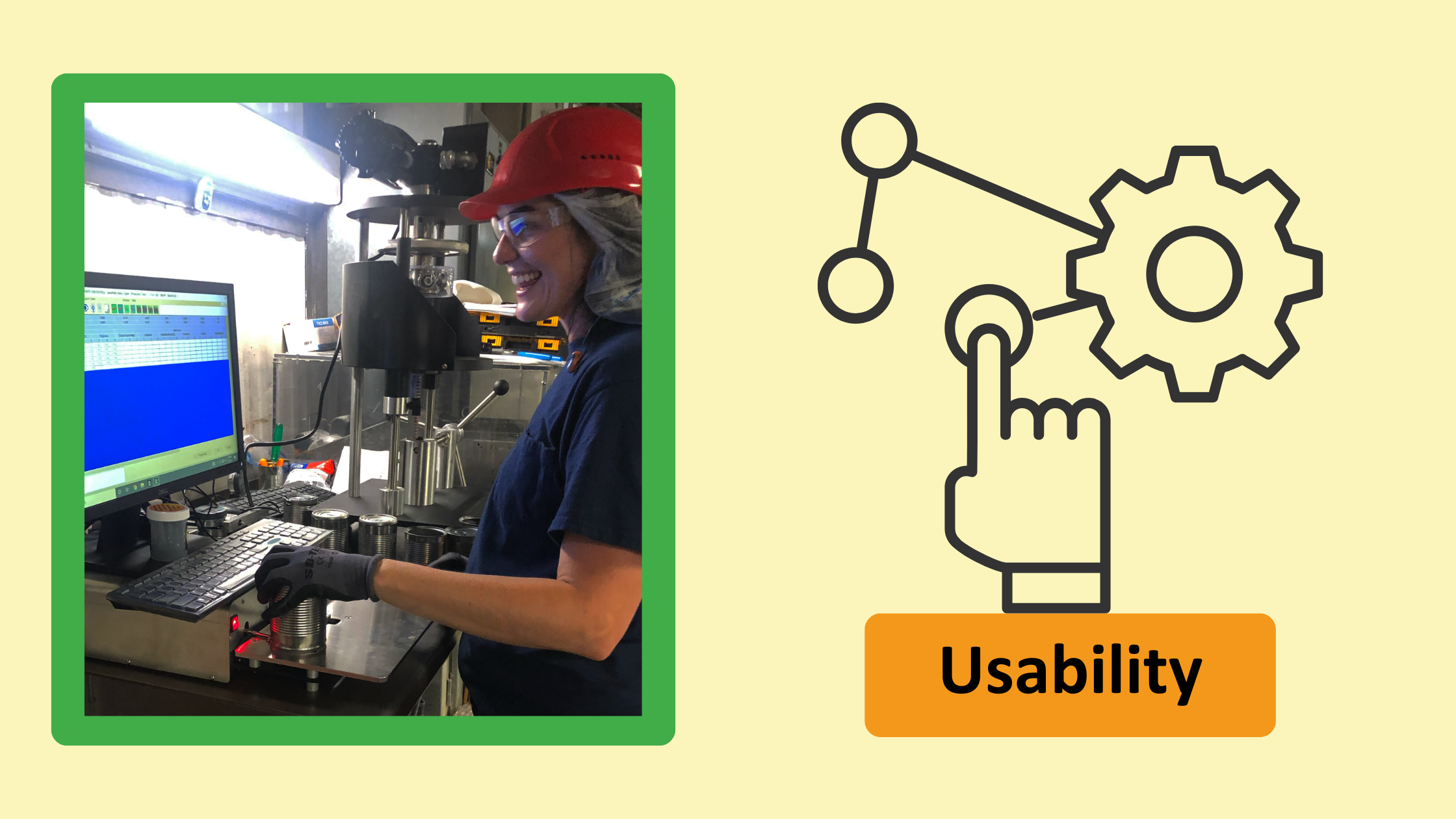
The second topic in our “What Matters Most When Purchasing a Seam Inspection System” series is Usability. How easy is the system for your team to learn, operate, and maintain?
When evaluating a seam inspection system, consider the following questions.
Does the system meet industry and regulatory expectations?
A seam inspection system should help your team meet industry requirements without creating additional work. Inspection equipment should support the inspection procedures, calculations, and recordkeeping practices outlined in the FDA’s Guide to Inspections of Low-Acid Canned Food Manufacturers and other industry best practices.
For more than 30 years, OneVision inspection systems have been designed to meet and often exceed FDA regulations for seam inspection and documentation. Software and hardware features such as automatic formula calculations, integrated reporting, and digital recordkeeping help simplify the inspection process while supporting quality assurance and compliance efforts.
Is inspection data secure, accessible, and easy to retrieve?
Any inspection equipment needs a reliable system for tracking and storing data within your network while allowing administrators to assign role-based access permissions. Operators should be able to efficiently enter data without risking data loss, and authorized users should be able to quickly retrieve inspection records, reports, and images when needed.
Data safety is a top priority at OneVision. That’s why our inspections systems are designed integrate with your network while securely storing inspection data. The SeamMate® and WeighMate® Systems are especially engineered with this philosophy in mind. Both systems include built-in databases, encrypted user passwords, and configurable access permissions that allow administrators to manage system features and a data access based on each user’s role.
Does the manufacturer understand your inspection challenges?

Manufacturers with extensive can seam inspection experience often have a deeper understanding of industry requirements, operator workflows, and the obstacles that can impact inspection consistency and efficiency. That knowledge can translate into better training, more effective support, and products that continue to improve based on real-world customer feedback.
OneVision was founded in 1994 with the goal of helping food and beverage canners closely monitor and control can seam quality. For over 30 years, the team has worked closely with customers to refine its inspection systems and develop solutions that address evolving industry needs. Many product innovations, including OneVision’s patented Automatic Seam Tightness and the Portable Beverage System, were developed in response to customer feedback and real-world inspection challenges.
In Conclusion
For any seam inspection system to be considered, its usability should be carefully evaluated before making an investment. The system should support industry requirements, help protect your operation’s compliance status, securely manage inspection data, and keep information accessible to authorized users. It’s also important to choose a manufacturer with deep industry experience and a commitment to continuously improving its products to better meet their customers’ needs.
Consider the questions in this article when engaging with manufacturers to help identify the right solution for your operation.
In the next article, we’ll explore “Accuracy – Can I trust what I’m seeing?”, another important factor to consider when purchasing a seam inspection system.